I just tried the iPhone 18 Pro — and Apple gave me two surprisingly good reasons to upgrade | Daily Reports Online
So no, neither of these fold, but the iPhone 18 Pro and iPhone 18 Pro Max still feel like modern-day flagship smartphones after my quick hands-on right after Apple’s Surprise and Shine event.
While neither flagship device carries the mystique and intrigue of the iPhone Duo, both march forward with a laundry list of features and enhancements that will push the iPhone into the future for many.
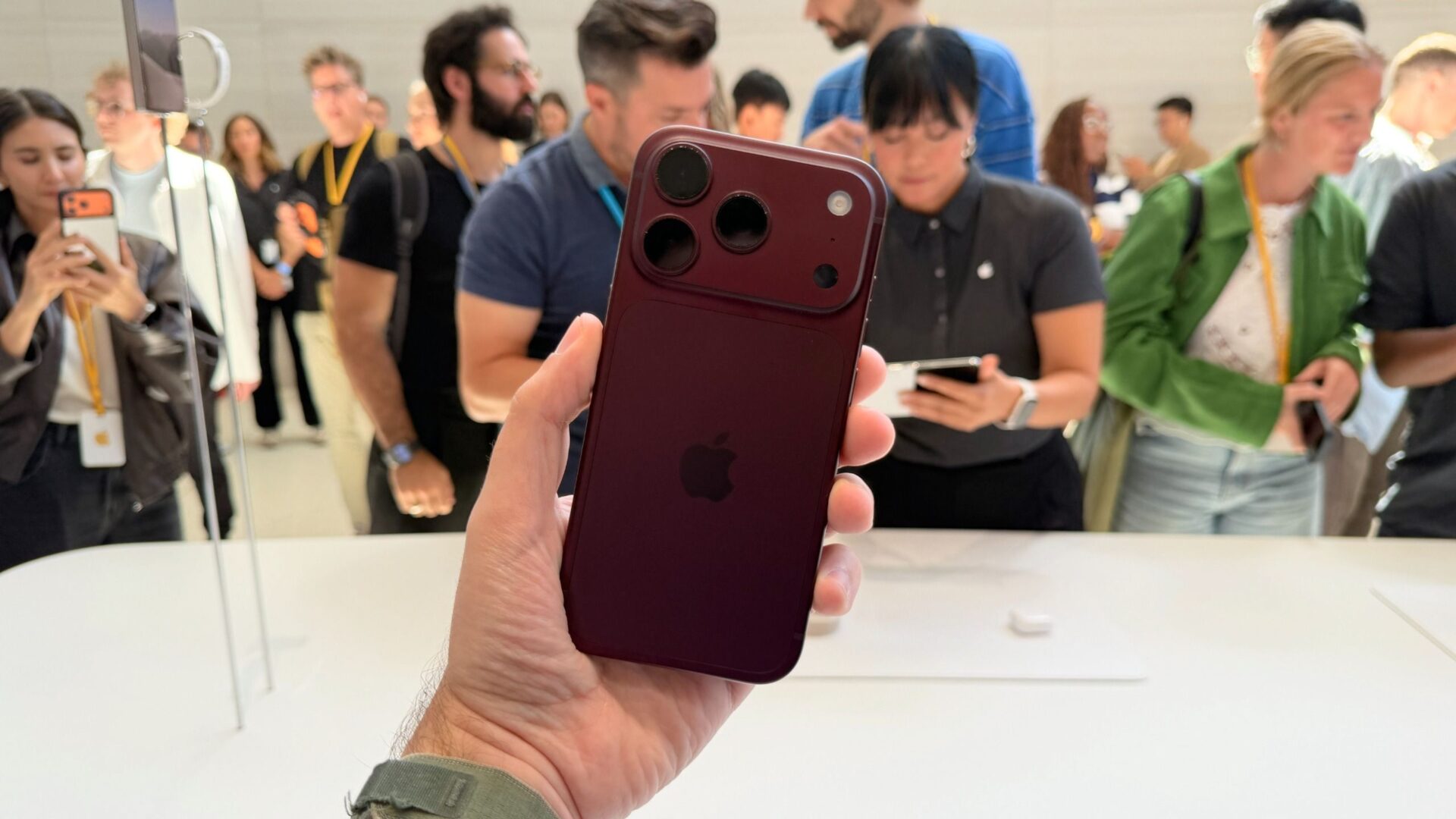
As someone who’s spent a lot of time reviewing the entry-level iPhones, like the iPhone 17 and iPhone 16, which normally get the fun new colors, I was instantly struck by the new shades. Immediately, Burgundy for the iPhone 18 Pro and iPhone 18 Pro Max stood out — it’s a lovely dark shade of red that can shimmer a bit depending on how the light hits it, and it’s definitely less of a pop than Cosmic Orange, but it’s really just lovely.
Latest Videos FromTechRadar
Back in black
There’s also Glacier, a light blue that can come across as bluish silver depending on how the light hits it — and it was the color of the invite for Apple’s Special Event. Black, in a very matte, dark fashion, is back as a Pro color option alongside silver.
Aside from that, these new phones look and feel very much like the iPhone 17 Pro and iPhone 17 Pro Max in your hand — not a bad thing, as that ushered in a slightly sturdier build with the larger camera plateau.
Arguably the biggest hardware change lives here, though, and it’s variable aperture — which you can actually see in action, opening and closing, with your own eyes — for the 48-megapixel main Fusion camera. This should give the 18 Pro and 18 Pro Max a leg up in low light, as you can adjust — either manually with Pro Controls or by letting the iPhone set it automatically — aperture, shutter speed, and white balance.
You can pick between a set of four — ƒ/1.48, ƒ/1.8, ƒ/2.8, and ƒ/4.0 — apertures for the main lens and, depending on your pick, you can let more light in or less, so it handles multiple depths for subjects in one shot more effectively.
I played around with these and the new Pro Controls interface at the top of the camera app, and here’s the good news: it’s fully customizable, so you can place what is most helpful there.
I didn’t have much time with it, but it’s clear it does open and close the aperture window on the back of the phone, so it moves as Apple describes. You have way more controls now over your photos so you can get closer to what you’re really after. It’s also coupled with enhancements to Photographic Styles that will let you add in texture or grain, as well as AI-infused photo editing features as part of iOS 27.

This 48-megapixel main camera with variable aperture is paired with a 48-megapixel telephoto lens and a 48-megapixel ultra-wide lens. This means that the 18 Pro and 18 Pro Max can still shoot from 0.5x to 8x optical, and up to 40x digitally. So while the iPhone Duo folds, the 18 Pro and 18 Pro Max do still pack the Pro-grade camera system.
On the front, there’s still the impressive CenterStage Camera and Face ID stack with all the nifty features that the 17 Pro and 17 Pro Max ushered in, but the change is a dramatically smaller Dynamic Island. And it’s not a case of shrinking it for shrinking’s sake either — the increased screen real estate around the smaller island that’s centered at the top lets it show up to three Live Activities at once, and each of these can show a bit more detail.
For instance, if you have music playing at the top and a timer next to it, you previously couldn’t actually see how much time is left — that’s fixed now. I tried a mix of these — tossing Flighty, Maps, Music, Timer, and other apps at the top — and I do believe this will be genuinely useful. I’m not sure it’s an immediate reason to upgrade from, say, a 17 Pro, but those who swear by the Dynamic Island won’t be disappointed.

Those are the most evident changes I noticed from a brief hands-on, and it’s a toss-up for me between the Burgundy and Glacier shades and the camera upgrades for my favorite new feature. iOS 27 ran really smoothly on the unit I used in the hands-on space Apple provided, and that’s likely thanks to the two-nanometer A20 Pro chip under the hood. It’s Apple’s fastest yet and features ‘Super Cores’ in the CPU, much like Apple’s M-Class silicon for the Mac lineup.
It’s also paired with a new thermal architecture that includes a larger vapor chamber, which should keep the iPhone 18 Pro and 18 Pro Max a bit cooler, especially around the raised camera plateau on the back. Perhaps the biggest change I didn’t get to test is the longer battery-life promise. The 17 Pro and 17 Pro Max were no slouches in this department by any means, but Apple’s running laps year over year, with the 18 Pro now lasting as long as last year’s 17 Pro Max and the 18 Pro Max going even further.
There’s a $100 price increase for these new devices in the United States — the iPhone 18 Pro starts at $1,199 for 256GB and the 18 Pro Max at $1,299 for 256GB. That’s a $100 increase generation over generation, and you can pay more to configure these up to 2TB. Both go up for preorder on September 12, 2026, and launch on September 18, 2026. There will be both carrier deals and the Apple Upgrade Financing route.
I’ll need to spend more time with both to see how much those changes actually matter in everyday use, but after this first hands-on, the iPhone 18 Pro and 18 Pro Max feel like a continuation of what Apple started with the 17 Pro generation rather than a complete rethink.
And honestly, that’s not a bad thing. The hardware still feels premium in hand, the new colors are excellent, the smaller Dynamic Island looks genuinely useful, and the variable aperture is the one change that immediately made me want to spend more time with the camera.
The iPhone Duo may have the flashier story this year, but the 18 Pro and 18 Pro Max still feel very much like the flagship iPhones to beat – and I’m especially curious to see what that camera can actually do once I get them out of Apple’s hands-on area and into the real world.

Follow TechRadar on Google News and add us as a preferred source to get our expert news, reviews, and opinion in your feeds.