‘It’s just attacks on price every single time we launch a product… If you want the best engineering, you have to pay’ — Jake Dyson is fed up with the criticism of Dyson’s prices | Daily Reports Online
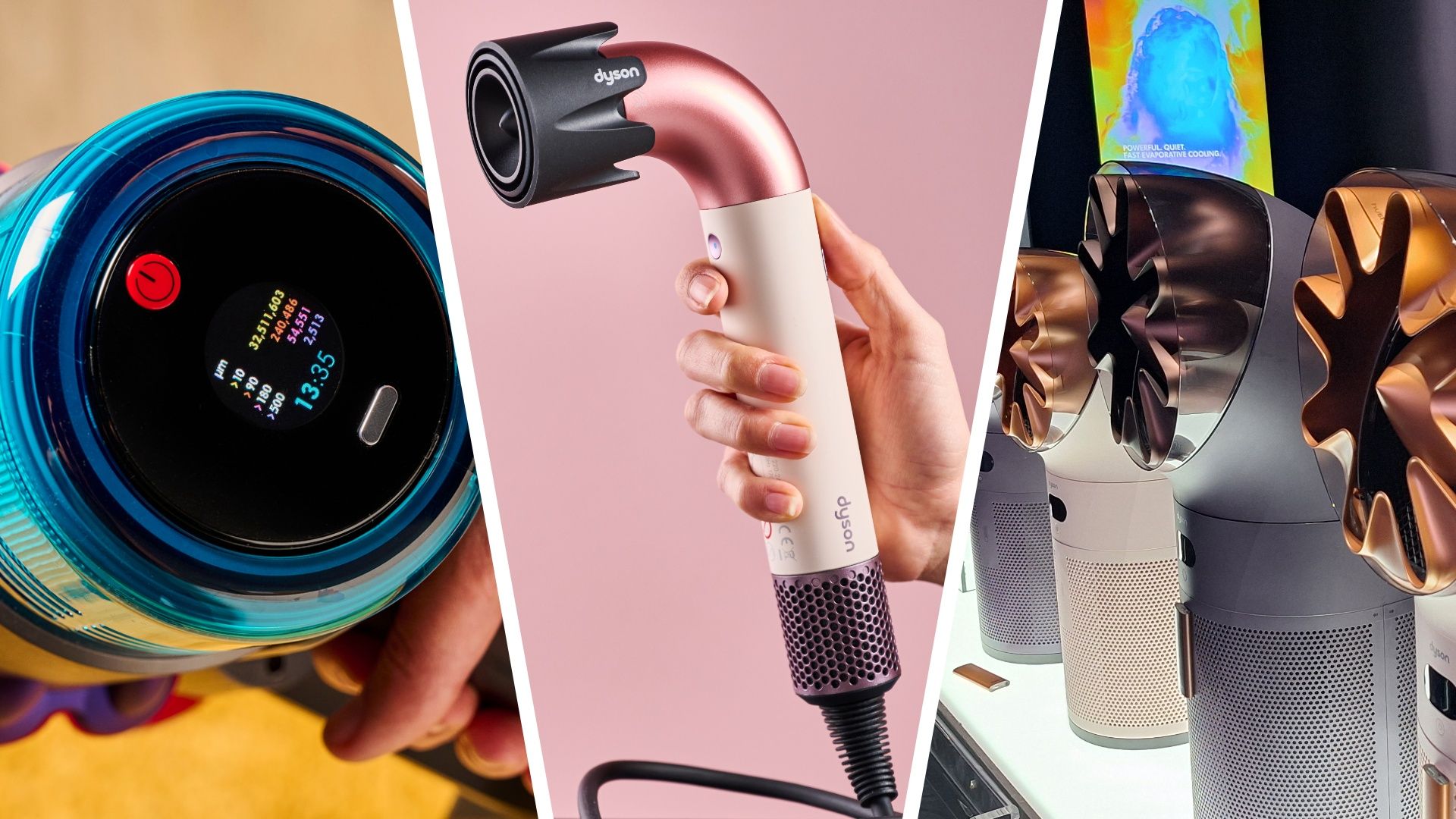
Talk to anyone about Dyson, and you can be certain that pricing will come up before long. It’s not unjustified: this is the brand that gave us a $399 (£299 / AU$549) hair dryer, back in 2016 when that kind of price tag was unfathomable for such a product. It’s the brand whose current flagship stick vacuum costs $979.99 (£749.99 / AU$1,349). And, most recently, it’s a brand that unveiled an electric toothbrush that costs $499.99 (£419.99 / AU$799).
I’m not surprised, therefore, that at a roundtable I attended at the recent Dyson Unpacked launch event, the conversion ended up turning to pricing. Nor was I surprised to hear that the roundtable guest of honor, Jake Dyson — son of brand founder James and company Chief Engineer — had plenty to say on the subject.
[To avoid confusion, throughout this feature I’ll use ‘Jake’ to mean the person, and ‘Dyson’ to refer to the brand.]
Latest Videos FromTechRadar
“If you want the best, you have to pay,” he begins. “If you want the best engineering, you have to pay. If you want all the features.”
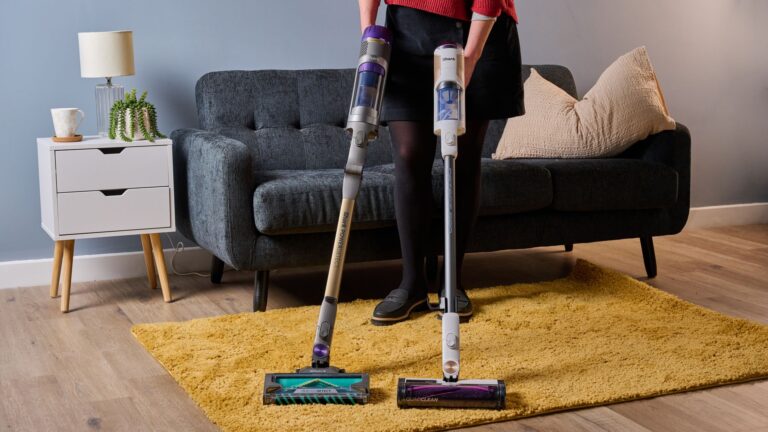
If you move past the price tag, Dyson’s products often really do achieve something different. That hair dryer’s unusual design breathed new life into a market that had been stagnant for years. That flagship stick vacuum can sense exactly the size and number of particles it’s sucking up and adjusts its suction in response. And the toothbrush? It has an in-built camera and can detect gaps between your teeth, into which it’ll shoot mouthwash.
So the price tag might not be on a par with that of competitor products, but neither are the products.
We’re not interested in doing the cheapest. At all. We want to introduce new technology and do new things.
Jake Dyson
“We’re not interested in doing the cheapest. At all. We want to introduce new technology and do new things. That’s what we’re interested in,” continues Jake. “We’re also not afraid to have the most expensive. Because, unfortunately, doing things like this, you can’t do cheaply.”
He’s also, frankly, sick of the constant discussions about it (of which I’m aware this article is a part). “We get quite a lot in America where it’s just attacks on price every single time we launch a product,” he says. I can sense the frustration from spending months and years developing a product, only for the headlines to be dominated by comments about the price.”
He continues: “They’ve completely missed the fact that… look at what it’s doing for you.” He gestures to the CameraJet, which is the hero launch from the event. “Look at the advance in oral care. And, you know, we can’t make things cheaply because they have high-tech technology in them. And they perform as well as they do.”
What is unfortunate about this particular example is that following our roundtable discussion, reports started rolling in from early customers that the CameraJet wasn’t performing well. In fact, in many cases, it was refusing to perform at all. I’ve discussed that in more detail in a separate article, and Dyson is adamant it’s an isolated issue with a handful of specific batches of products, rather than a design fault.
It’s enough here to state that not every product is going to be a slam-dunk. I’ve tested a ton of different Dyson products and there are innovations I love, and innovations I don’t rate at all, but my overriding feeling is that I’m pleased that someone is out there changing things up. You don’t have to buy it, after all.
Combatting copycats
Imitation might be the sincerest form of flattery, but Jake is less than enamored with the copycat products that have a habit of following any successful Dyson launch.
“We obviously patent areas of the product, if we can patent them, to prevent that. But we do that in every product, and they always find a way,” he says. “And they find a way, but the product isn’t as good. They say that it is, but it isn’t.”
The brand similarly guards against third-party accessories being subbed in. There are chips in the brush heads that mean the CameraJet will detect if a non-Dyson head is attached — just as the vacuums will know if you’ve added a fake battery, and the hair stylers know if you’ve picked up a budget attachment pack on Amazon. That kind of thing does start to sting a little, because Dyson accessories tend to come with their own hefty price tag. The toothbrush heads are $29.99 / £25 / AU$49 for a pack of two, for example.

The engineering flair is one thing, but Dyson products tend to also have a recognizable aesthetic, and part of that is the colors. Some of them have a personal connection, says Jake: “This blue [on the toothbrush] is inspired by Yves Klein, who’s an artist that my father really likes. He wasn’t allowed to use the same blue, but we created our own. And the first vacuum cleaners have purple in them, because of the lavender from the south of France, which is something he loved as well.”
He continues: “So it’s about, you know, references, but [also] about art, bringing that creativity into the product, and also recognizing it as a Dyson product.”

Doubling up
Blazing new trails inevitably requires a lot of effort and time (and therefore money). Dyson is also keen to be as efficient as possible. “We can make one thing and use it across multiple products,” says Jake. “You try not to do things twice that take an awful long time and a lot of investment. You try and use it again in another product.”
He talks about certain innovations the brand will seek to “platform”. So a version of the shrunk-down motor and heater that’s used in the Airwrap also features in the Supersonic r hair dryer, and now also in Dyson’s new Airsmooth hot brush.
You try not to do things twice that take an awful long time and a lot of investment.
Jake Dyson
Similarly, the battery platform developed for the PencilVac also shows up in the PencilWash. “Once we’ve done the electronics and the management system for the batteries, which is an expensive development, we can all use the same thing in multiple [products]. So platforming is quite important,” he adds.
The process for this happens naturally. “You cross-pollinate, you join the dots — ‘If we put that with that, we could do this’,” he shares. “You’re thinking about other areas of the home, things people use every day… As a company, we’re getting much better at predicting that before we do it.”

He continues: “It makes us realize there are other technologies we need to develop ourselves — which we are, behind the scenes — to enable us to go into those new areas and do something better than anyone else.”
So we won’t expect Dyson’s pace of innovation to slow any time soon, then — but neither should we expect prices to drop. It’s a strategy that has paid off so far. As Jake recalls, of the brand’s decision to launch its $400 Supersonic when you could get a hairdryer for $40: “It didn’t stop anyone buying them.”

Follow TechRadar on Google News and add us as a preferred source to get our expert news, reviews, and opinion in your feeds.