‘We test what others don’t do’: SAP tells us how it is helping TSG Hoffenheim’s football journey hit new heights – and why its AI efforts in sport are only getting started | Daily Reports Online
“At the end of the day”, “it’s 11 versus 11”, we’ve all heard the cliches – but what if football teams could get an extra advantage with their use of technology?
Using data in sport is nothing new – think of the Oakland A’s Moneyball, the ‘marginal gains’ of the Sky cycling team, and Formula 1’s analysis of every speck of data for the extra bit of performance.
But in football, perhaps no one is using data more effectively than German side TSG Hoffenheim – and ahead of their Europa League game against Crystal Palace, we went to find out more.
Latest Videos FromTechRadar
Committed to technology
Based in the small village of Sinsheim, TSG Hoffenheim has enjoyed a rapid rise up the German league pyramid in recent years, going from the amateur leagues to recording 19 consecutive seasons in the Bundesliga and reaching European competitions in several of those.
The club saw major investment from SAP founder Dietmar Hopp, who acquired TSG Hoffenheim in 2005, and has since been a pioneer in the use of technology and data analysis in all its sporting areas.
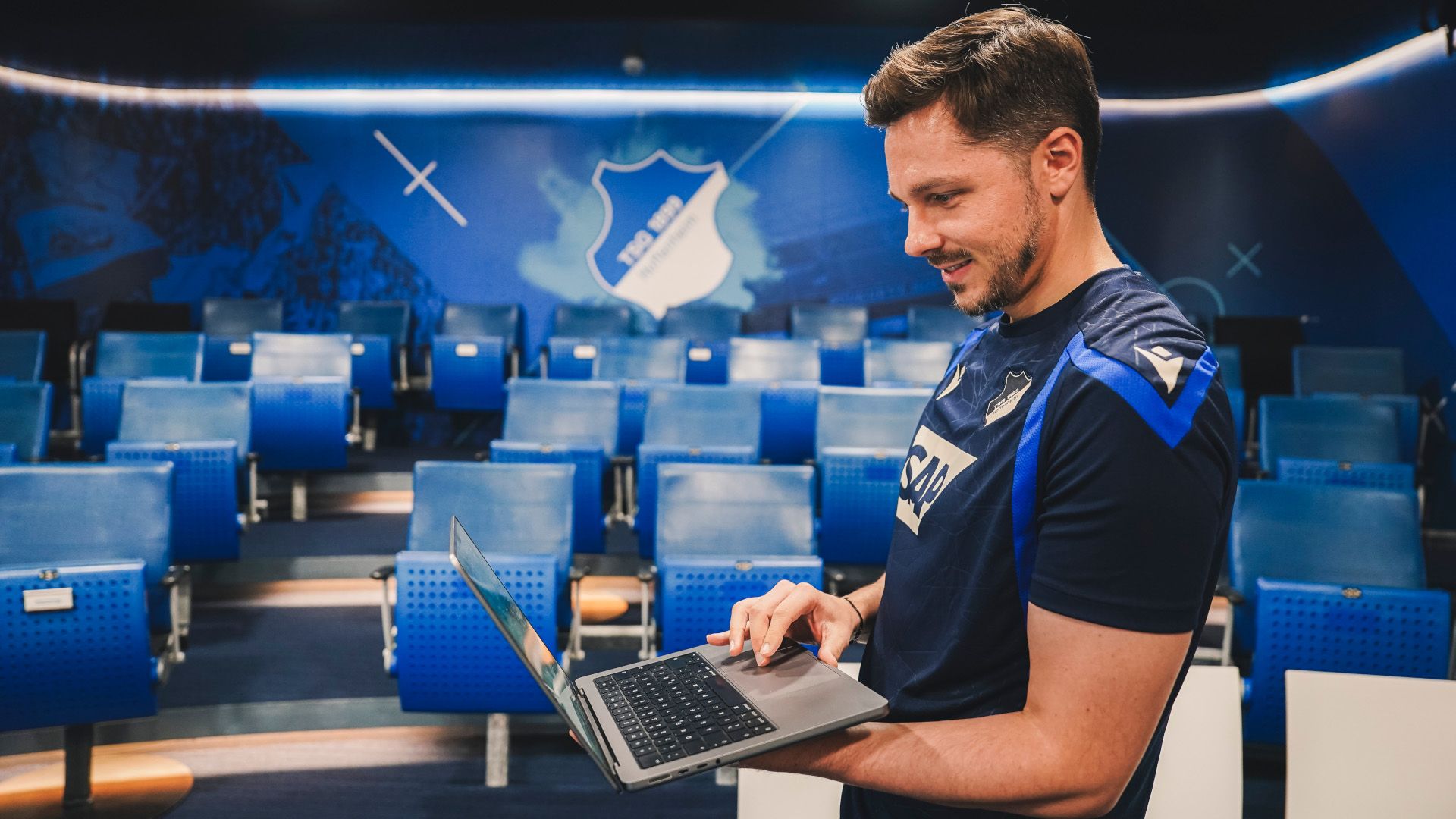
“Our niche is technology driven, but also talent development,” Timo Gross, Head of Football Intelligence at the club, tells us, “we test what others don’t do.”
The club has been using SAP’s Sports One platform for some time, with the software covering everything from scouting new players to improving training routines to spotting potential injuries before they happen.
TSG Hoffenheim is “a club which is committed to the technology”, Fadi Naoum, Senior Vice President Sports & Entertainment, SAP, notes, “(in sport) you need a customer who trusts you and you need to have a real partnership, because you depend on the feedback of the club.”
Naoum outlines how the SAP Sports One suite covers the whole player platform, collecting billions of data points to give coaches and the players themselves an all-over view of performance.
Everything from health and fitness to training and match performance, and even scouting data is connected in one suite, with desktop and mobile applications able to provide up-to-date information whenever it is needed.
On the latter area, scouting is an invaluable way for clubs to unearth the next big thing, but with reports coming in from club staff and freelancers all the time, there can sometimes be a case of information overload – SAP Sports One uses its Joule AI platform to sift through the data to provide extra assistance and analysis where needed.
Staff and coaches can use natural language questions such as “What are the strengths and weaknesses for Player X?” to help the club make more informed decisions on the next major signing.
When it comes to the games themselves, the SAP Sports One platform doesn’t just offer video playback and selected clips. Players can now literally put themselves back in the game via an immersive analysis tool which lets them relive game situations to see where they could improve or perform differently.
Analysts can also search for specific clips, describing the scenarios they are looking for in natural language eg “Show counterattacks after ball recovery that resulted in a shot on target,” with results being returned in seconds.
All these use cases and more look to help staff, players and coaches cut down on time-consuming manual tasks and searches, giving them more time to focus on what matters – helping the club be at its highest level to win games.
“We’re using AI as a colleague, an extension of the team and the back office, so the team can really focus more on what the AI has prepared for them,” Naoum notes.
Away from the pitch and training ground, the club also uses SAP’s Business Tech Platform for the enterprise side, with its services ranging from a ticketing AI assistant to a virtual changing room in the club’s online shop, giving TSG Hoffenheim a central location for its business operations.

As a huge football fan myself, I ask Gross and Naoum how we ensure the sport doesn’t become too dominated by technology.
“It’s important with AI that not the most powerful or rich team will be successful,” Naoum concludes, “but the team which knows how best to use the technology.”
“I’m a fan…this is football, this is emotion, it’s all about the human being,” Gross adds, “at the end of the process, it is the people’s decision, supported by AI.”
“I think we will come to a point where AI or systems are getting more information on all the context, but it is special for me to be at the end, to decide, and not to lose the connection to those who need to execute.”
“It’s in our culture to be the pioneer and go in a new direction, to go ways which may not always lead to the target, but lead to a way of asking new questions – and that makes it special.”
“We don;t know what benefits are also coming in the future – maybe in a couple of months I would ask different questions,” Gross adds, “but this is the first step…now we have to be clear about what I want to get out (of the data).”
“There is more to come,” Naoum notes, “we are in the beginning now, and we don’t know what will come.”
And just to prove the ridiculousness and unpredictability of football, TSG Hoffenheim went on to draw 1-1 with Crystal Palace, despite playing against 10 men for half an hour, due to a last minute Palace equalizer – so there are some things even the most developed AI model can’t predict…

Follow TechRadar on Google News and add us as a preferred source to get our expert news, reviews, and opinion in your feeds.